
Ask parents what they want for their children in twenty years, and marks are rarely the first answer. They say: happy, confident, kind, able to look after themselves, able to work with others. Those are life skills, and they can be taught.
That is why life skills are part of the school week at SIGMA, not an extra.
What we mean by life skills
- Communication: speaking clearly, listening well and sharing ideas with confidence
- Collaboration: working in a team, sharing responsibility and handling disagreement
- Independence: managing time, belongings and small decisions
- Resilience: trying again after a setback and managing frustration
- Healthy habits: sleep, food, movement and knowing when to ask for help
- Good choices: respect, empathy and doing the right thing when no one is watching
Why they cannot be left to chance
Children do pick up some of these skills naturally. But many only grow with practice, feedback and the chance to get things wrong safely. A child who is never asked to present to the class will not become a confident speaker by accident. A child who never works in a group will struggle to share a task later.
School is the ideal place for this practice. Children spend much of their day there, alongside peers, with adults who can guide them.
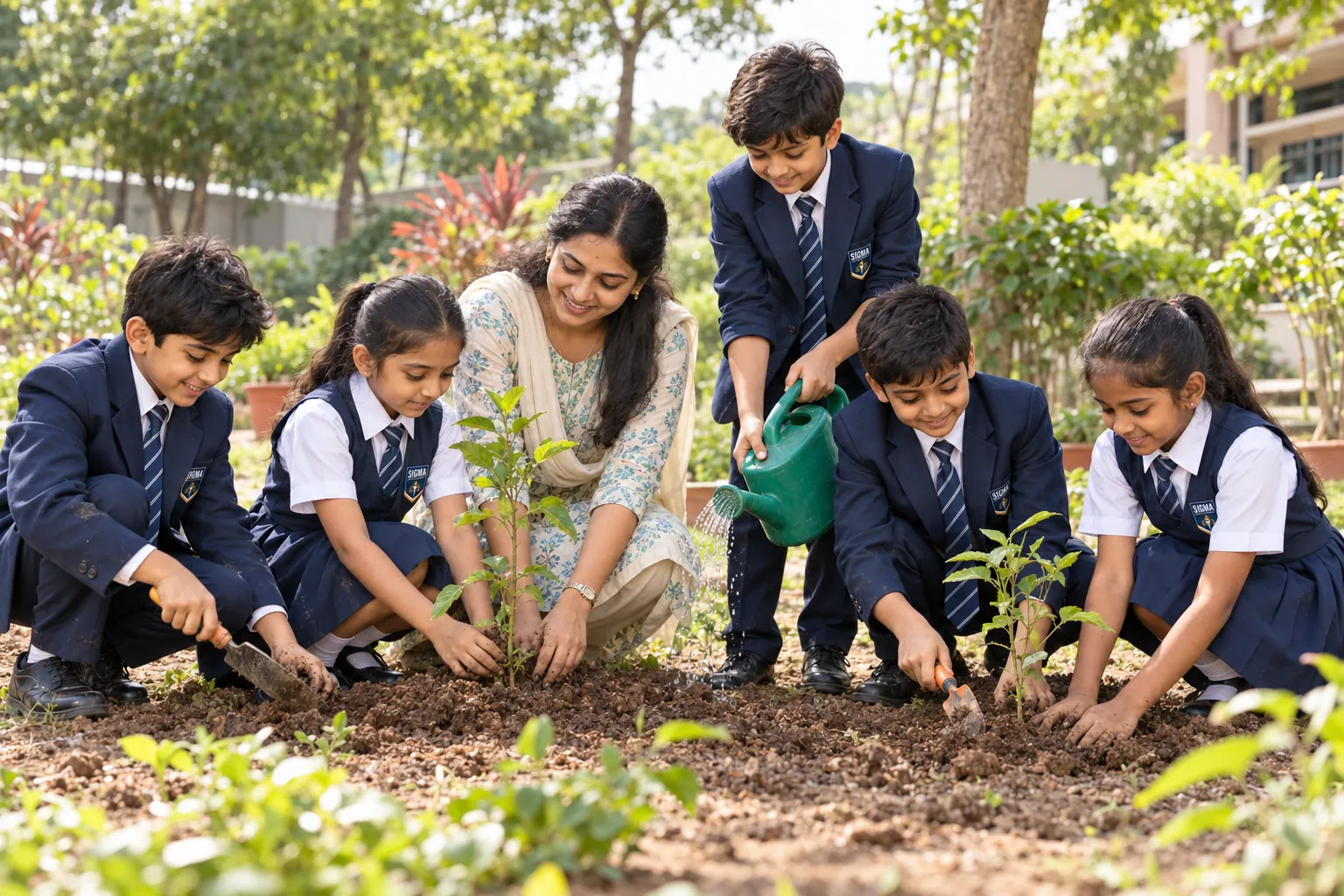
Some lessons do not happen at a desk. Children discover confidence by trying things.
How life skills show up at SIGMA
In the classroom
Our ASTERIA approach asks children to question, discuss, work in groups and reflect. Those are life skills in action, built into ordinary lessons.
On the field and on stage
Sports, arts, performances and STEAM projects teach teamwork, discipline and how to handle both winning and losing. They also help children discover what they are good at.
In residential life
For residential students, everyday routines are a daily lesson in independence and living alongside others. You can read more in our guide to preparing for boarding.
Five ways to build life skills at home
- Give real responsibilities. Small daily jobs, done without reminders, build independence.
- Let them order, ask and explain. Encourage your child to speak for themselves in shops, at the doctor's and with relatives.
- Talk about feelings. Naming emotions is the first step to managing them.
- Let them struggle a little. Resist fixing every problem straight away. Ask "What could you try?"
- Praise effort, not only results. Children who value effort are more willing to try hard things.